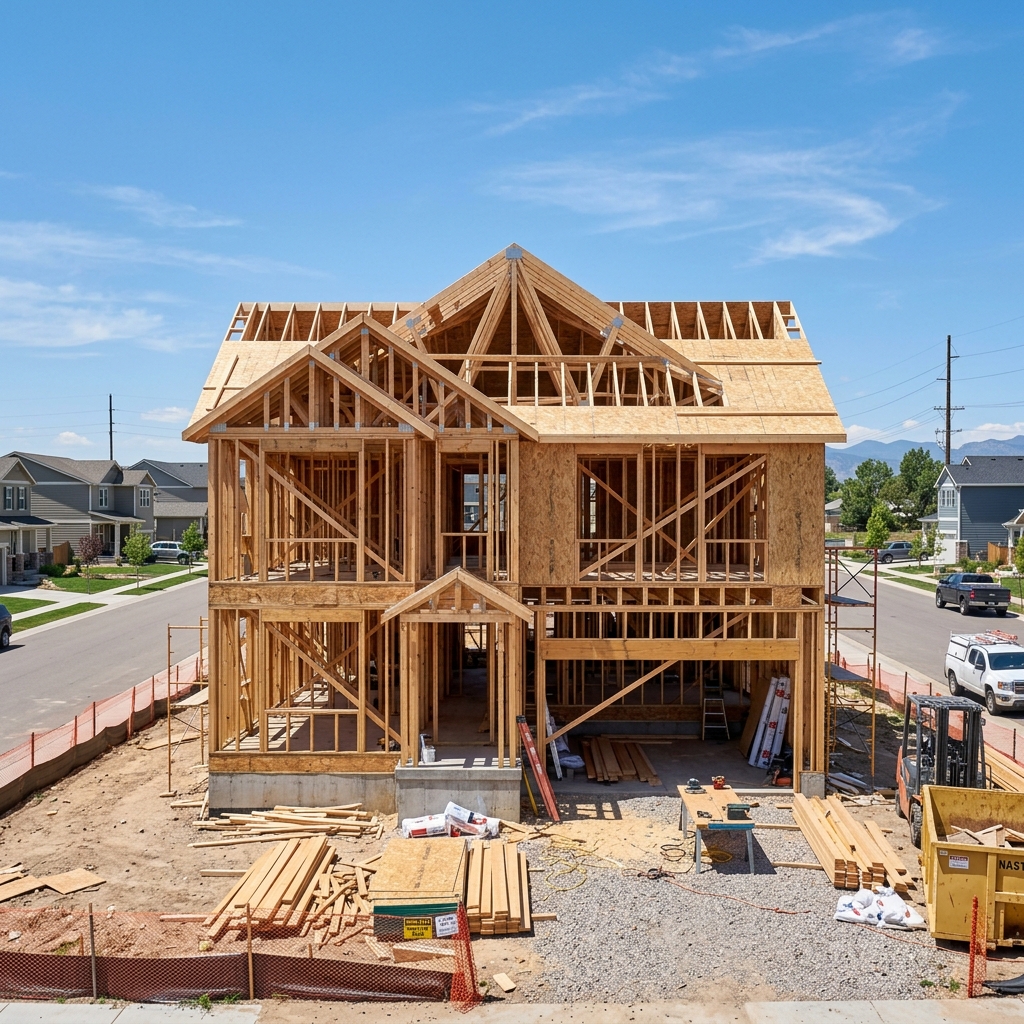





What Is a Hard Money Loan?
A hard money loan is a short-term real estate loan — typically 6 to 12 months — secured by investment property and underwritten primarily on the property's value rather than the borrower's income. It is also called private money.
Two features define the category. It is short-term: most hard money loans run 6 to 12 months, occasionally up to 24. And it is for business or investment purposes only — hard money is not used to buy a primary residence, which keeps these loans outside most consumer-mortgage regulation and is a major reason lenders can close so fast.
How Do Hard Money Loans Work?
Hard money loans are underwritten on the deal, not the borrower: the lender sizes the loan against the property's value and your exit plan, funds in as little as one to two weeks, and is repaid when you sell or refinance. Payments are usually interest-only, so your monthly cost stays low while your capital is deployed.
The full principal comes due at the end of the term, paid off by your exit — a sale, or a refinance into longer-term financing. Lenders care intensely about that exit; a clear, credible payoff plan is often the difference between an approval and a decline. Because the loan sits in first-lien position, the lender's protection is the equity cushion, which is why leverage is lower than on a conventional mortgage.
Hard Money Loan Rates, Points & Fees (2026 Data)
Most hard money loans carry an interest rate between 10% and 12% in 2026, plus about 2 origination points, for an all-in effective cost commonly between 12% and 16% annually. Independent 2026 data confirms the range.
According to Lightning Docs, a hard money loan-document software provider, the average interest rate on short-term hard money loans in the second quarter of 2026 was 10.41%, across 9,777 loans funded in 41 states between April and June 2026, with an average loan size of $546,703. Separately, Analytics Logics reported an average hard money rate of 9.95% in the first quarter of 2026, with average origination points of 2.96% and an average LTV of 65.04% across 47 states.
On pricing structure: lenders package costs differently — one may charge 3 points and no junk fees, another 2 points plus processing and underwriting fees, a third 1 point but a higher rate. This is why comparing offers matters; the headline rate rarely tells the whole story.
Typical Hard Money Loan Terms & Guidelines
Loan Amounts
Most hard money lenders set a minimum around $100,000, lend up to $3,000,000 on residential investment property, and work in the $1M–$15M range for commercial real estate. Some residential lenders go higher for the right deal.
Loan-to-Value (LTV) & Down Payment
On a purchase, hard money LTV typically maxes out around 70%, requiring a 30% down payment; on a refinance it usually caps near 65%. Conservative lenders cap purchases at 65%, and a smaller group stretches to 75% for strong borrowers. Analytics Logics put the average hard money LTV at 65.04% in Q1 2026 — a reminder that advertised maximums are ceilings, not defaults.
Rehab & After-Repair Value (ARV) Structure
For renovation projects, the common structure is up to 85% of the purchase price plus 100% of the rehab budget, capped so the total loan stays at or below 70% of the after-repair value (ARV). Investors shorthand this as "85/100/70": you bring roughly 15% of the purchase in cash, the lender funds the work, and your leverage is governed by the finished value.
Loan Term & Payments
Most hard money loans run 12 months with interest-only monthly payments, and the loan is structured around your exit. Some lenders offer 6-month terms with extensions; a rare few go to 24–36 months.
Hard Money Loan Requirements — Do You Qualify?
Hard money approval depends mainly on equity in the deal and a credible exit strategy, with credit and experience mattering more on larger projects. Lenders generally look for:
- Equity — a 15%–30% cash contribution depending on loan type.
- A credible exit — sale or refinance, with realistic timing. The single most important qualifier.
- Cash reserves — enough liquidity to carry the project and absorb overruns.
- Credit — many national lenders want 620+ FICO; many local lenders care less about the score than the reason behind it. A credit report is almost always pulled to check for recent foreclosure or bankruptcy.
- Experience — helpful for rehabs and construction; first-timers can still get funded with a larger down payment and lighter scope.
Because every lender weighs these differently, the same deal can get very different terms from three lenders — which is exactly where a broker adds value.
Types of Hard Money Loans
The main types of hard money loans are fix & flip, purchase bridge, refinance bridge, cash-out, ground-up construction, and rehab-to-rent (BRRRR).
- Fix & Flip — buy and renovate a residential property, then sell within 12 months; sized against ARV, with 100% of the rehab budget typically funded.
- Purchase Bridge — close a purchase in days when a bank can't move fast enough; refinance out shortly after.
- Refinance Bridge — buy time when a maturing loan can't yet be refinanced conventionally, usually up to 65% LTV.
- Cash-Out — tap equity in an investment property you own, generally up to 65% LTV, with a solid exit.
- Ground-Up Construction — faster draws and higher leverage than a bank, typically up to 85% of project cost, for experienced builders.
- Rehab-to-Rent (BRRRR) — buy, rehab, rent, then refinance into a long-term DSCR loan; lenders confirm you can qualify for the take-out (often 680+ FICO, DSCR above 1.2).
Hard Money vs. Conventional Financing
Choose conventional financing when you have time and clean financials and want the lowest rate; choose hard money when you need to close in days, the property needs work, or a bank has already declined the deal. For a flipper racing a closing deadline, hard money is often the only real option; for a stabilized buy-and-hold, a bank wins.
Pros and Cons of Hard Money Loans
The main advantages of hard money are speed, asset-based approval, and the ability to fund deals banks decline; the main drawbacks are higher cost and lower leverage. Pros: close in 1–2 weeks, flexible on property condition, minimal income documentation. Cons: 12%–16% all-in cost, larger down payment, and short terms that demand a disciplined exit. Hard money is a scalpel, not a mortgage.
How to Choose a Hard Money Lender
The best hard money lender for a deal is rarely the one with the lowest advertised rate — it's the one whose loan box, speed, and draw process actually fit your specific project. Points and fees, real LTV on your deal, certainty of close, extension terms, and whether the lender funds deals like yours in your market all matter as much as the rate.
This is the problem Capwell solves. Bring us the scenario once, and we take it to the lenders most likely to fund it competitively. You compare real terms side by side and close on the strongest offer.