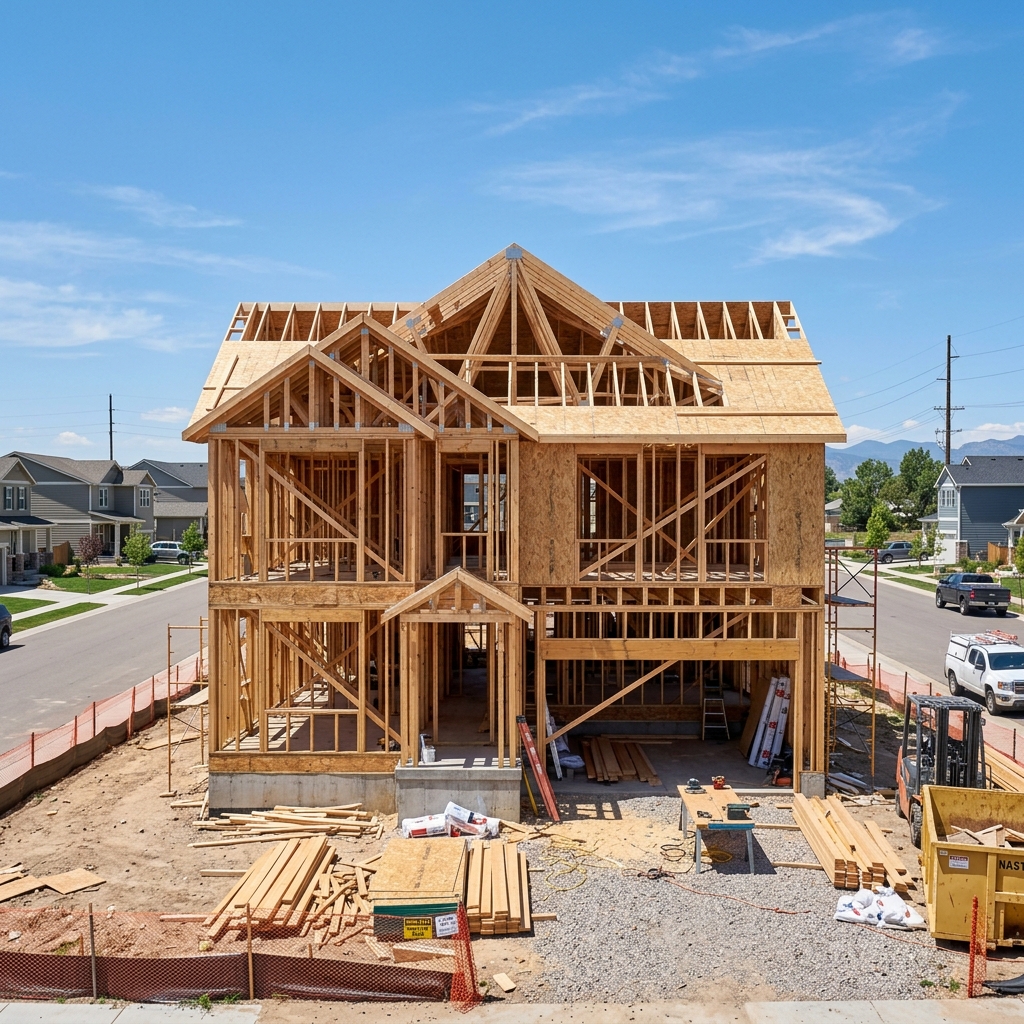





What Is a Construction Loan?
A construction loan is a short-term, asset-based loan that funds ground-up development of an investment property, with money released in draws as the build progresses rather than in one lump sum. Private construction loans are secured by the project, underwritten on total cost and completed value rather than the borrower's income, and are for business or investment purposes only. Most run up to 24 months.
How Do Construction Loans Work?
A construction loan is sized against total project cost — land plus hard and soft construction costs — and capped against the property's completed value. The lender holds the construction budget and releases it in draws, sending an inspector to verify completed work before funding each phase, usually within two to five business days. Payments are interest-only on the drawn balance, and the loan is repaid when you sell or refinance the finished property.
Construction Loan Rates, Points & Fees (2026)
Most private construction loans carry an interest rate between 8% and 13% in 2026, with most around 10%, plus 2 to 5 origination points. Construction lending carries more points than a simple bridge because of the added draw management, inspections, and execution risk. Pricing depends on your experience, leverage, land equity, and the strength of the completed-value estimate.
Construction Loan Terms & Guidelines
Loan Amounts
Most construction lenders lend from about $200,000 to $50,000,000, spanning single spec homes up to larger multi-unit developments.
Loan-to-Cost & Land
Leverage commonly reaches up to 85% of total project cost, with many lenders funding 100% of vertical construction; land is financed up to about 50% of value, or up to 65% when permits are in place, and existing land equity can count toward the required contribution.
Term & Payments
Loans run up to 24 months, interest-only on the drawn balance, structured around a sale or a refinance at completion.
Draws
The budget releases in phases as work is completed and inspected, keeping funds tied to real progress.
Construction Loan Requirements — Do You Qualify?
Construction approval depends on the project, your team, and a credible exit, with experience and credit affecting leverage. Lenders generally look for: entitled, shovel-ready land with approved plans and permits; an approved budget and a qualified general contractor; construction reserves, often around 10% of the budget plus several months of payments; a FICO of 650+ (700+ for the highest leverage); and typically one ground-up project in the past two years — though first-timers can qualify with a strong, vetted contractor.
Construction Loan Scenarios
Common construction scenarios are a builder who already owns entitled land and needs the full vertical budget; a purchase of shovel-ready land financed alongside construction; a land-equity cash-out at closing when the land is owned free and clear; and a build-to-rent project that exits into a long-term DSCR loan.
Construction Loan vs. Bank Financing
Choose a bank construction loan when you have the time, track record, and financials it requires and want the lowest rate; choose a private construction loan when you need higher leverage, faster draws, and less red tape, or when a bank's process is too slow for your timeline. Private construction lending trades a higher rate for speed and flexibility on execution.
Pros and Cons of Construction Loans
The main advantages of a private construction loan are higher leverage, fast draws, and approval based on the project rather than income; the main drawbacks are a higher rate, more points, and the requirement for entitled land, a qualified contractor, and reserves. Construction financing rewards a shovel-ready project with a clear exit.
How to Choose a Construction Lender
The best construction lender for a project is the one funding your build type and experience level whose leverage and draw process fit your budget and timeline — not just the lowest rate. Bring Capwell the scenario once, and we match it with construction lenders likely to fund it competitively so you can compare real terms and keep the build moving.