

Property Types

Hotel & Hospitality Investing: How to Profit From Hotels (2026 Guide)

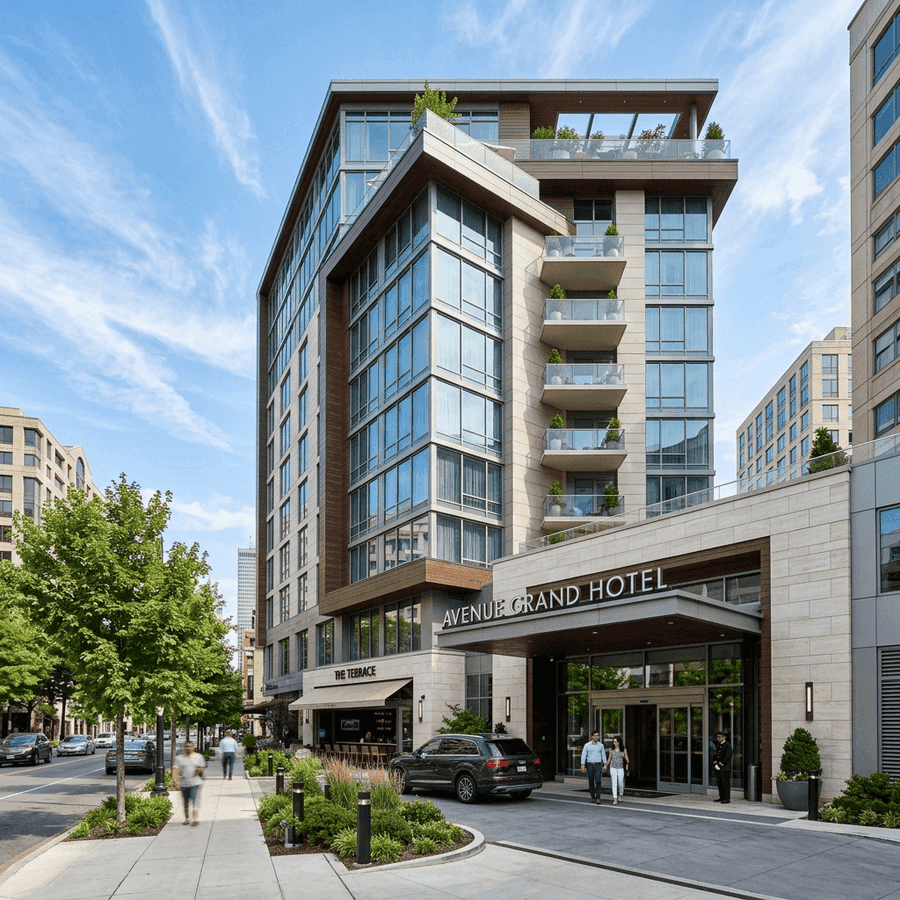
A hotel is a commercial property that rents rooms by the night — an operating business as much as a building, where income resets daily with demand. Bought through an entity for business purposes, a hotel's value is driven by its operating performance (RevPAR, ADR, and occupancy), and 2026 demand is outpacing early forecasts.

Nationwide
Lending
Fast
Decision
Secure &
Confidential
FOR EXPERIENCED AND OWNER-OPERATOR INVESTORS.
Nationwide
Lending
Fast
Decision
Secure &
Confidential
FOR EXPERIENCED AND OWNER-OPERATOR INVESTORS.
Step 1 of 2

Check Eligibility

For Your Next Real Estate Project

Soft credit pull only — won't affect your score

256-Bit SSL Encryption & Privacy Protected

No obligation • Response within 24 hours

310-956-8549 for calls and texts

What Is Hotel & Hospitality Real Estate?

Hotel and hospitality real estate is property that generates income by renting rooms and services to guests on a nightly basis — from limited-service and extended-stay hotels to full-service and resort properties. As an investment, it's held in an entity and valued on its operating performance rather than a fixed lease, which makes it the most business-like of the major property types: revenue resets every night, so strong management and brand can lift returns far above a passive asset.

What Is Hotel & Hospitality Real Estate?

What You Can Do With It

Hotels offer several ways to build income and value — here's what you can do, and where to learn how each is financed.

StrategyWhat It MeansLearn More
Buy & Operate (Cash Flow)Own and run a hotel for operating income> Commercial Real Estate Loans
Value-Add / RepositionRenovate, rebrand, or improve management to lift RevPAR> Renovation & Value-Add / Commercial Bridge
Franchise / Flag ConversionReflag a hotel to a stronger brand to drive demand> Commercial Bridge Loans
Buy Fast, Stabilize, RefinanceBridge a repositioning, stabilize operations, refinance> Bridge-to-Permanent
Owner-Operator (SBA)Buy and run a hotel as your own business> SBA Real Estate Financing
1031 Into HospitalityTrade into a hotel to defer capital gains> 1031 Exchange Financing

Hotel Market Snapshot (2026)

U.S. hotel demand is outpacing forecasts in 2026 — here's why investors are paying attention (20252026 data).

Demand beat expectationsRevPAR grew ~4.8% in the first half of 2026, well above the initial ~0.6% forecast (CoStar / STR / Tourism Economics)
Strong recent monthsJune 2026 occupancy hit 69.6%, ADR $173.76, and RevPAR $120.97 (+8.4% YoY) — the best month since March 2023 (CoStar)
Rate power is realADR rose 6.7% year-over-year in June 2026, showing genuine pricing power (CoStar)
Event-driven surgesThe 2026 FIFA World Cup drove RevPAR up 51.6% in Miami and 40.7% in San Francisco during match weeks (Cushman & Wakefield)
The high end is leadingLuxury hotels posted ~8.8% RevPAR growth year-to-date, leading all segments (Cushman & Wakefield)
A big-event pipelineHost markets face a loaded calendar — World Cup, Super Bowl, NBA All-Star, and the 2028 Olympics — supporting demand for years (Hotel Online)
Improving profitabilityOperators improved gross operating profit margins in 2026 through better demand conversion (HotelData)

Figures are third-party market data (CoStar/STR, Cushman & Wakefield, Tourism Economics, HotelData), not Capwell results. Market conditions change.

Serhii Sarkisov
Written by Serhii Sarkisov
Capwell Capital — Commercial Real Estate Loan Broker (Capwell Capital DBA, TX)
Last updated: August 2026

Why a Hotel Is Different From Every Other Property Type

Key Insight:

A hotel is an operating business, not a passive lease, which is the single most important thing to understand about hospitality investing. Where an apartment or a warehouse signs tenants to leases, a hotel re-rents every room every night — so its income can rise fast in strong demand and fall fast in weak demand. That volatility is also the opportunity: a well-managed, well-branded hotel can grow RevPAR and profit in ways a fixed-lease asset simply can't.

How Hotels Make Money: RevPAR, ADR, and Occupancy

Hotel performance is measured by three metrics that every investor learns first. Occupancy is the percentage of rooms filled; ADR (average daily rate) is the average price per occupied room; and RevPAR (revenue per available room) combines the two — it's ADR multiplied by occupancy, and it's the headline number for a hotel's health. In June 2026, U.S. hotels ran about 69.6% occupancy at a $173.76 ADR, producing roughly $120.97 RevPAR. Raising either rate or occupancy lifts RevPAR — and value.

How to Make Money With a Hotel

There are three core ways to profit from hospitality, plus variations. Buy-and-operate owns and runs a hotel for operating income. Value-add buys an underperforming or tired hotel and lifts RevPAR through renovation, rebranding, or better management. And flag conversion reflags a property to a stronger franchise brand to drive reservations and rate. Because a hotel is valued on its operating income, operational improvements translate directly and quickly into value.

The Hotel Market in 2026: Demand Beat the Forecast

The U.S. hotel market has outperformed expectations in 2026. RevPAR grew about 4.8% in the first half — far above the initial 0.6% forecast — driven mostly by rate, with ADR up 3.5% year-to-date and accelerating to 6.7% in June. Occupancy is climbing, big events are boosting host markets, and the 2026 World Cup alone drove RevPAR up more than 50% in some cities during match weeks. With a multi-year pipeline of major events, demand tailwinds look durable.

Event-Driven Demand: A Real Investor Edge

Major events create "compression nights" — periods when demand spikes and hotels can charge premium rates — and 2026 through 2028 is unusually rich with them. The FIFA World Cup, Super Bowl LXI, the NBA All-Star Game, and the 2028 Summer Olympics all land in U.S. host markets, generating outsized RevPAR gains where they occur. For investors, a hotel in or near a host market with a strong event calendar carries a demand tailwind that a fixed-lease asset can't capture.

How Hotels Are Financed

Hotels are financed based on operating performance, the brand or flag, and the sponsor's experience. Because a hotel is a business, lenders scrutinize the operating history, the franchise agreement, and the management more than for any other property type. Stabilized hotels are financed through bank, CMBS, and SBA lending, while repositioning and conversions are often financed with a bridge loan and refinanced once operations stabilize. Owner-operators can use SBA financing — hotels are one of the most common SBA property types — to buy and run a hotel with as little as 10% down. (See the linked financing pages for details.)

Real-World Examples

Profile

The PIP nobody budgeted for

Rafael bought a franchised limited-service hotel that looked profitable on paper, but he skimmed the franchise agreement. Months after closing, the brand required a property improvement plan — a mandatory renovation costing far more than he'd reserved — or he'd lose the flag. He got through it by using a bridge loan to fund the PIP and reposition the property, and the renovated, still-branded hotel lifted its RevPAR afterward. His lesson: with a franchised hotel, the flag agreement and its PIP requirements are part of the purchase price — read them first.

The PIP nobody budgeted for
Profile

The value-add hotel with a management problem

Lucia bought a tired independent hotel running well below its market's RevPAR, convinced the numbers could be better. The building was fine; the operation was the problem — weak management, no revenue strategy, poor online reviews. She brought in a professional management company, added dynamic pricing and a real online presence, and RevPAR climbed toward the market over the next year. Because hotels are valued on operating income, the value rose with it. Her takeaway: in hospitality, you're often buying a management problem you can fix, not a real estate problem.

The value-add hotel with a management problem
Profile

The owner-operator using SBA

Sanjay had managed hotels for a national brand for years and wanted to own one. He bought a $2.2 million limited-service hotel using SBA financing with 10% down and ran it himself, applying the operating discipline he already knew. Owning instead of managing turned his expertise into equity, and the event-driven demand in his market gave him room to push rates on peak nights.

The owner-operator using SBA

Illustrative examples using typical 2026 market rates — not actual Capwell clients, and not an offer or a guaranteed rate. Your terms depend on the property, equity, and profile.

How It Plays Out

Priya had built a commercial portfolio and was drawn to hotels for their upside, but the operating side intimidated her — RevPAR, ADR, franchise flags, PIPs. She found an underperforming branded hotel and wondered: Was the low RevPAR a building problem or a management problem? What would the franchise require her to spend? And what financing fit a hotel that needed repositioning?

Working through it, she learned the pieces that matter: a hotel is valued on operating performance, the franchise agreement and its PIP are part of the real cost, and a bridge loan could fund the purchase and renovation with a permanent refinance as the exit. She verified the flag terms, structured the deal, brought in strong management, and refinanced once RevPAR stabilized.

If you're weighing your first hotel deal, send us your scenario and we'll help you structure it.

Access More Financing for Your Project

We help identify and present the full value of your project so all eligible costs and existing equity can be considered.

Step 1 of 2

Check Eligibility

For Your Next Real Estate Project

Soft credit pull only — won't affect your score

256-Bit SSL Encryption & Privacy Protected

No obligation • Response within 24 hours

310-956-8549 for calls and texts

Reference
Land value and existing land equity
Approved plans and permits
Architecture, engineering, and eligible soft costs
Site preparation and completed construction work
Remaining vertical construction budget
Completed value or stabilized property value

Tips

These are general pointers investors commonly raise, not rules — every deal is different, and none of this is financial, legal, or tax advice.

1

2

3

4

5

6

7

The above is general information to help you ask better questions — not financial, legal, or tax advice, and not a recommendation to take any specific action. Decide what's right for your situation and consult your own advisors.

Free Investor Guide

Free Investor Guide

Maximize Your Returns & Reduce Your Capital Costs

Download our free guide on how to structure your real estate investments, secure better financing terms, and efficiently extract cash from your properties.

By submitting this information, you confirm that: (i) the information provided by you is accurate; (ii) you consent to receive our guide via email; and (iii) you agree that the information you are providing is subject to Capwell's Privacy Policy and Terms of Use.

Frequently Asked Questions

What is hotel and hospitality real estate?
How do hotels make money?
What is RevPAR, ADR, and occupancy?
Why is a hotel considered an operating business, not passive real estate?
What is a franchise flag and a PIP?
How is a hotel valued?
Can I buy a hotel with SBA financing?
Is 2026 a good time to invest in hotels?
What should I check before buying a hotel?
Is Capwell a lender?

Ready to Fund Your Deal?

Submit your property details and let our team structure the optimal capital stack for your project.