
Property Types

Multifamily Investing: How to Make Money With Apartments (2026 Guide)

Multifamily property is any residential building with five or more units, and it's one of the most durable ways to build wealth in real estate. Bought through an entity for business purposes, an apartment property produces cash flow from many tenants at once, can be improved to raise its value, and is financed on the property's income rather than your personal income.

Nationwide
Lending
Fast
Decision
Secure &
Confidential
FOR INVESTORS SCALING INTO APARTMENTS.
Nationwide
Lending
Fast
Decision
Secure &
Confidential
FOR INVESTORS SCALING INTO APARTMENTS.
Step 1 of 2

Check Eligibility

For Your Next Real Estate Project

Soft credit pull only — won't affect your score

256-Bit SSL Encryption & Privacy Protected

No obligation • Response within 24 hours

310-956-8549 for calls and texts

What Is Multifamily?

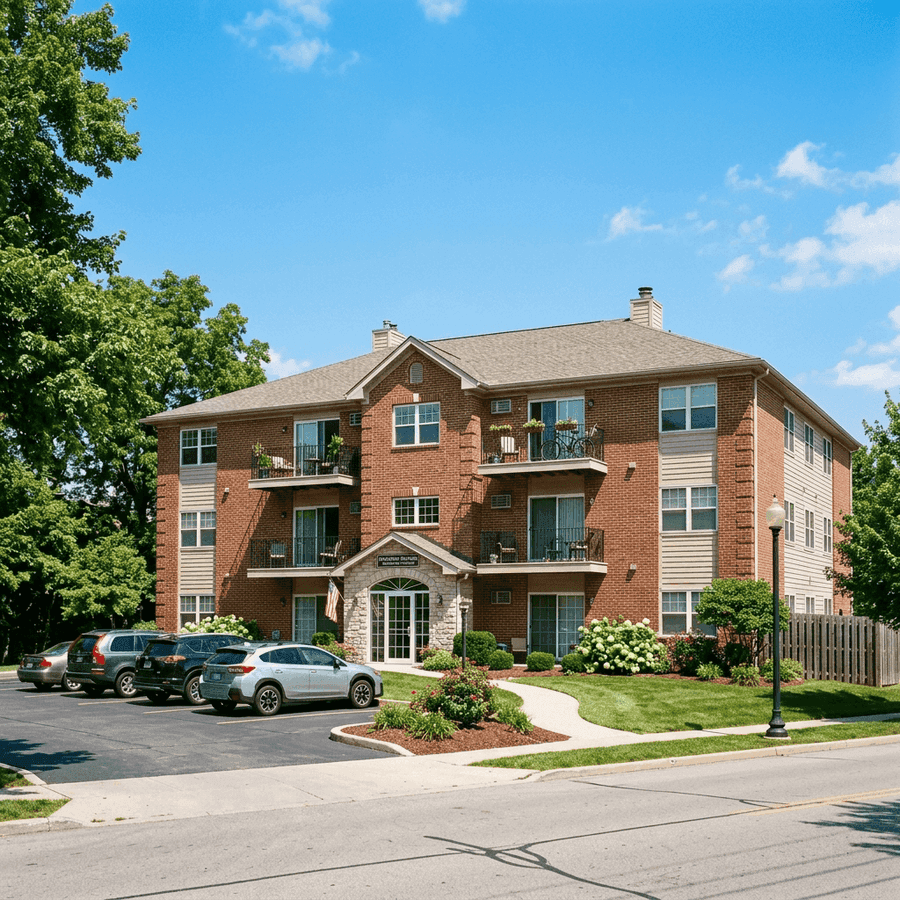
Multifamily is a residential property with five or more rental units under one roof or one ownership — from a small apartment building to a large community. As an investment, it's held in an entity such as an LLC and valued on the income it produces (its net operating income), not on comparable home sales. Because one loan and one roof can hold many income streams, multifamily is how many investors move from single houses to serious, scalable cash flow.
What Is Multifamily?

What You Can Do With It

Multifamily gives an investor several ways to build income and value — here's what you can do, and where to learn how each is financed.

StrategyWhat It MeansLearn More
Buy & Hold (Cash Flow)Own a stabilized building for monthly income across many unitsDSCR Rental Loans / Multifamily Financing
Value-Add / RepositionRenovate units, raise rents, increase the building's valueRenovation & Value-Add / Commercial Bridge
Buy Fast, Stabilize, RefinanceAcquire quickly with bridge debt, improve, and refi into long-termBridge to Permanent Financing
Build-to-Rent / DevelopmentConstruct a new multifamily building from the ground upGround-Up Construction
Refinance or Cash-OutPull equity from an existing multifamily propertyCash-Out Refinance
Acquire With a Partner/SyndicatePool capital to buy a larger building than you could alonePurchase & Acquisition

Multifamily Market Snapshot (2026)

Multifamily is one of the largest and most in-demand asset classes in U.S. real estate — here's why investors keep moving toward it (20252026 data).

A huge, active market~$165.5 billion in U.S. apartment investment volume in 2025 (MSCI Real Capital Analytics)
Record renter demand~22.4 million rental households in 2025 — an all-time high (CBRE)
Renting is where growth isRenters made up ~80% of all new households formed last year (Arbor)
A structural shortage~4.3 million more housing units needed by 2035 (NMHC / NAA)
Fewer new competitors comingConstruction starts are down 40%+ from the 2022 peak (NMHC / NAA)
Durable rent baseApartment rents remain ~25% above pre-pandemic 2019 levels (Moody's Analytics CRE)
Demand strengtheningQ2 2026 net absorption hit 124,600 units, up 8% year-over-year — the strongest since mid-2024 (Cushman & Wakefield)

Figures are third-party market data (MSCI, CBRE, Arbor, NMHC/NAA, Moody's, Cushman & Wakefield), not Capwell results. Market conditions change.

Serhii Sarkisov
Written by Serhii Sarkisov
Capwell Capital — Commercial Real Estate Loan Broker (Capwell Capital DBA, TX)
Last updated: August 2026

Why Investors Move Into Multifamily

Key Insight:

Multifamily is where many real estate investors go to scale, because one property can hold many income streams under a single loan. Instead of managing ten separate houses in ten locations, an investor owns one building with ten units — spreading vacancy risk, concentrating management, and producing meaningful monthly cash flow. With a record ~22.4 million rental households in 2025 and renters making up about 80% of new household formation, the demand base under apartments is deep and structural.

How Multifamily Is Valued: Income, Not Comps

Multifamily is valued on the income it produces, which is what makes it fundamentally different from a single-family home. A house is priced by comparable sales; an apartment building is priced by its net operating income (NOI) divided by a market capitalization (cap) rate. The practical consequence is powerful: an investor who raises rents or cuts expenses increases the building's value directly — a $50,000 lift in annual NOI at a 6% cap rate adds roughly $830,000 in value. This is why value-add multifamily is one of the most reliable ways to force appreciation.

How to Make Money With an Apartment Building

There are three core ways to profit from multifamily, plus variations. Buy-and-hold generates steady cash flow from many tenants and long-term appreciation. Value-add buys an underperforming building, renovates units and raises rents, and captures the increase in NOI and value. And build-to-rent develops new apartments to hold as rentals. Across all three, the income-based model means operational improvements translate straight into equity.

The Multifamily Market in 2026

The apartment market is normalizing in 2026 after several years of heavy new supply, and the fundamentals favor patient investors. Apartment investment volume reached about $165.5 billion in 2025 (MSCI), demand is strengthening — Q2 2026 net absorption hit 124,600 units, up 8% year over year (Cushman & Wakefield) — and new construction starts have fallen more than 40% from the 2022 peak, which means fewer competing units delivering in the years ahead. With a national housing shortage estimated at 4.3 million units by 2035, the long-term demand story remains firmly intact.

Small vs. Large Multifamily

Multifamily spans a wide range, and the entry point matters. Small multifamily — roughly 5 to 20 units — is the common on-ramp: it's financeable through agency small-balance and DSCR programs, manageable for a growing investor, and priced more like a hybrid of residential and commercial. Larger apartment communities are institutional assets, financed through agency, bank, and bridge debt and underwritten on full operating statements. Many investors start small, build a track record, and scale up.

How Multifamily Is Financed

Multifamily is financed based on the property's income and its stabilization. A stabilized building qualifies for long-term agency financing from Fannie Mae or Freddie Mac — often non-recourse, with rates for strong deals in the mid-5% to mid-6% range in 2026 — or bank debt. A value-add or transitional building is usually financed first with a bridge loan, then refinanced into permanent agency debt once stabilized. Because these loans qualify on the asset, investors can scale beyond what personal-income underwriting allows. (See the linked financing pages for details.)


What to Watch Out For

Multifamily rewards good operators and punishes sloppy ones. These are the mistakes that sink apartment deals most often.

  • Trusting the seller's pro forma — buy on the actual trailing-12-month income (T12), not the optimistic projected rents a seller shows you. Verify every number.
  • Underestimating deferred maintenance — roofs, plumbing, HVAC, and parking across many units add up fast; a professional inspection and a capex reserve are non-negotiable.
  • Ignoring the insurance line — insurance costs have spiked in many markets and can wreck a deal's cash flow; get a real quote before you buy, not an estimate.
  • Aggressive rent-growth assumptions — a value-add plan that needs big rent jumps to work can fail if the market softens; underwrite conservatively.
  • Weak property management — multifamily lives or dies on operations; bad management turns a good building into a money pit.
  • Buying at a low cap rate hoping for compression — paying up and betting rates fall is speculation, not underwriting; the numbers must work at today's rates.
  • Not stress-testing the refinance — if you bridge a value-add, model the permanent takeout at realistic rates and DSCR before you close, because the exit is where deals break.

Real-World Examples

Profile

The pro forma that wasn't real

Damon found a 12-unit building listed with a seller pro forma showing strong rents and a clean 15% return. Excited, he almost signed — until he pulled the actual trailing-12 financials and found half the units were renting far below the projection and three were vacant. The "deal" only worked on paper. He renegotiated the price down to reflect the real income, structured a bridge loan to fund a unit-by-unit renovation, and raised rents to market over 18 months. Buying on the real T12 instead of the seller's dream is what turned a trap into a genuine value-add.

The pro forma that wasn't real
Profile

The insurance bill that ate the cash flow

Rosa put an 8-unit building under contract, confident in her numbers — until her insurance quote came back nearly triple what the seller had been paying, wiping out most of her projected cash flow. Instead of walking, she used the quote to renegotiate the price, added a real capex reserve, and confirmed the rents could still cover the new expense load. The lesson she now repeats: on multifamily, get the real insurance quote before you're committed, because one line item can decide the whole deal.

The insurance bill that ate the cash flow
Profile

Scaling from houses to a building

Tariq owned four single-family rentals and was tired of chasing repairs across four zip codes. He traded up into a 10-unit building — one roof, one location, ten income streams. The transition taught him that apartments are an operating business, not a passive rental: he hired professional management, put reserves aside for the shared systems, and refinanced into agency debt once the building stabilized. Today it produces more cash flow than his four houses did, with far less running around.

Scaling from houses to a building

Illustrative examples using typical 2026 market rates — not actual Capwell clients, and not an offer or a guaranteed rate. Your terms depend on the property, equity, and profile.

How It Plays Out

Priya had built up a few rentals and knew she wanted to scale, but a 15-unit building felt like a different world. Could she even qualify — she didn't have a W-2 income big enough for a building that size? How would she value it? And what if the seller's rent numbers were inflated? Working through it, she learned the pieces that matter: multifamily is financed on the building's income, not her paycheck; value is set by NOI and cap rate, so she needed the real financials, not a pro forma; and a bridge loan could fund a value-add plan with an agency refinance as the exit. She structured it that way — verified the T12, bridged the purchase, renovated, and refinanced into long-term agency debt. If you're ready to move from houses to apartments, send us your scenario and we'll help you structure the deal.
How It Plays Out

Access More Financing for Your Project

We help identify and present the full value of your project so all eligible costs and existing equity can be considered.

Step 1 of 2

Check Eligibility

For Your Next Real Estate Project

Soft credit pull only — won't affect your score

256-Bit SSL Encryption & Privacy Protected

No obligation • Response within 24 hours

310-956-8549 for calls and texts

Reference
Land value and existing land equity
Approved plans and permits
Architecture, engineering, and eligible soft costs
Site preparation and completed construction work
Remaining vertical construction budget
Completed value or stabilized property value

Tips

These are general pointers investors commonly raise, not rules — every deal is different, and none of this is financial, legal, or tax advice.

1

Underwrite on the real T12

Base your offer on actual trailing income, not the seller's pro forma.

2

Get a real insurance quote early

It's one of the biggest swing costs in multifamily today.

3

Budget capex reserves

Shared roofs, systems, and parking need funding before something breaks.

4

Value it on NOI

Remember every dollar of added net income multiplies into value at the cap rate.

5

Line up management

Apartments are an operating business; good management protects your return.

6

Plan the financing to the stabilization

Stabilized buys agency; value-add usually bridges first, then refinances into permanent.

7

Compare more than one lender

Agency, bank, and bridge price the same building differently; shopping is how you keep the best terms.

The above is general information to help you ask better questions — not financial, legal, or tax advice, and not a recommendation to take any specific action. Decide what's right for your situation and consult your own advisors.

Free Investor Guide

Free Investor Guide

Maximize Your Returns & Reduce Your Capital Costs

Download our free guide on how to structure your real estate investments, secure better financing terms, and efficiently extract cash from your properties.

By submitting this information, you confirm that: (i) the information provided by you is accurate; (ii) you consent to receive our guide via email; and (iii) you agree that the information you are providing is subject to Capwell's Privacy Policy and Terms of Use.

Frequently Asked Questions

What counts as a multifamily property?
How do you make money with an apartment building?
How is multifamily valued?
What is the difference between small and large multifamily?
How much down payment do you need for a multifamily property?
Can I finance an apartment building based on its income instead of mine?
What is a value-add multifamily deal?
Why is the T12 more important than the pro forma?
Is multifamily a good investment in 2026?
Is Capwell a lender?

Ready to Fund Your Deal?

Submit your property details and let our team structure the optimal capital stack for your project.